
The short answer
You likely need a new AC if repairs are frequent, rooms stay warm or humid, bills keep rising, or the outdoor unit is badly corroded. A good installation starts with a proper load calculation and a check of your ducts, drainage, and electrical, so the system fits your home and controls humidity. We'll tell you plainly whether a repair or a replacement makes more sense.
Installing a new air conditioner in Miami Beach is a bigger decision than in most of the country. Here, the AC runs for most of the year, carries the load through a long, humid wet season, and has to cope with salt air near the water. A system that's sized wrong or installed carelessly will cost you comfort and energy every month. This page explains when replacement makes sense, what we look at before recommending equipment, the options you'll have, what drives the cost, and how an installation visit works from start to finish.
Signs It May Be Time for a New AC
Not every problem calls for a new system. But some patterns suggest your current unit is near the end of its useful life, or was never a good fit for the house.
If you're seeing one of these, it's worth a diagnostic visit before deciding. If you're seeing several, replacement is often the more sensible conversation.
- Repairs are becoming frequent, and the same parts keep failing.
- The system runs almost constantly, but rooms still feel warm or sticky.
- Indoor humidity stays high even with the AC on, leaving a damp or musty feel.
- Electric bills keep climbing without any change in how you use the house.
- The outdoor unit shows heavy corrosion on the coil, cabinet, or connections, which is common near salt air.
- Your system uses an older refrigerant that is increasingly hard to get, making refrigerant repairs difficult.
- You're renovating, adding space, or changing how rooms are used.
What We Check Before Recommending a System
A new air conditioner is only as good as the match between the equipment and your home. Before we suggest a size or model, we look at the whole system, not just the unit that's failing.
Oversizing is a common mistake in humid climates. A unit that's too big cools the air quickly and shuts off before it removes enough moisture, so the house feels clammy. Getting the size right matters as much as the brand.
- A load calculation based on square footage, insulation, windows, sun exposure, and ceiling heights, rather than sizing by rule of thumb
- The existing ductwork: size, leaks, insulation, and condition, especially ducts running through hot attics
- The air handler location, condensate pan, and drain line, since clogged drains are a frequent wet-season problem
- Electrical service, breaker, and disconnect, to confirm they suit the new equipment
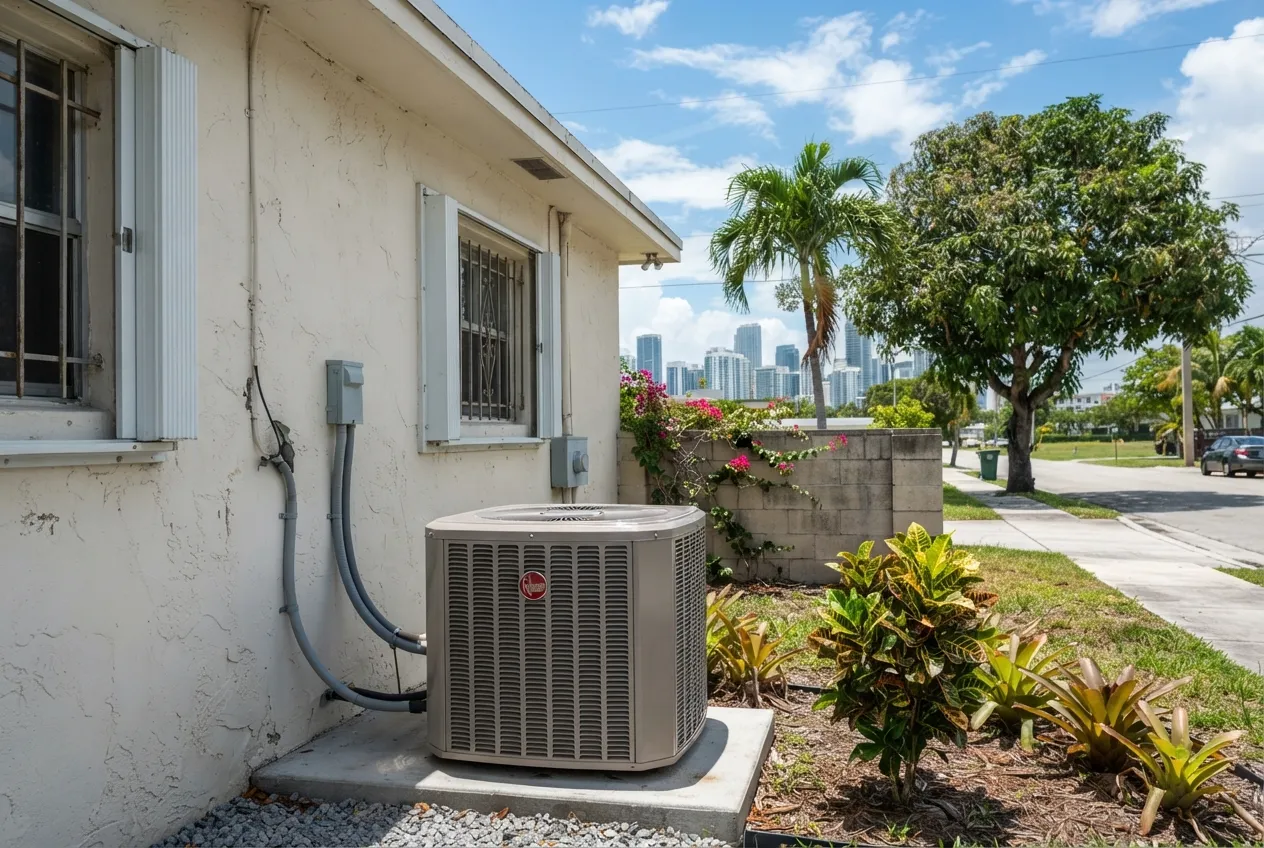
- Where the outdoor unit sits: drainage, clearance, exposure to salt spray, and how it is secured against storm winds
- Thermostat location and compatibility
Repair or Replace: Your Options
We'll tell you plainly whether a repair is reasonable. If your system is in decent shape and the problem is a single component, fixing it usually makes sense. If it's older, failing repeatedly, or poorly matched to the home, we'll walk you through replacement options.
Florida Power & Light runs a residential program that offers rebates on qualifying high-efficiency central air conditioners and heat pumps, applied through participating contractors at the time of installation. Terms can change, so we confirm the current details before including anything in a quote. The federal home efficiency tax credit that once covered qualifying heat pumps only applied to systems placed in service before the end of 2025, so it isn't available for new installations.
- Repair the current system when the failure is isolated and the rest of the equipment is sound
- Replace the outdoor condenser and indoor air handler together so the components are properly matched
- Upgrade to a heat pump, which cools in summer and provides efficient heat on cooler winter nights
- Consider a ductless mini-split for additions, converted garages, or rooms the central system can't reach well
- Choose a variable-speed or two-stage system for better humidity control and steadier temperatures
What Affects the Cost
Every installation is priced for the specific home, so we don't quote figures before seeing the space. These are the factors that move the price most.
Condos and older homes can add steps, such as building or association approval for where equipment goes. We'll flag anything like that early, and we'll explain each line of the quote so you can compare options side by side.
- System size and type: central AC, heat pump, or ductless
- Efficiency rating and features like variable-speed compressors
- Condition of the ductwork and whether it needs repair, sealing, or replacement
- Access to the air handler, such as a tight closet or an attic
- Electrical upgrades needed to support the new equipment
- Pad, mounting, or tie-down work for the outdoor unit
- Permits and inspections required by your city
- Whether a utility rebate applies to the equipment you choose
How an Installation Visit Works
Here's what to expect from the first visit through the final check.
Planning ahead helps. The wet season brings heavy AC use from May through October, and hurricane season runs from June 1 to November 30. If your current system is struggling, scheduling a replacement during the cooler, drier months can mean less disruption and less risk of a breakdown in peak heat.
- Assessment: a technician inspects your current system, ducts, and home, and asks how it's been performing.
- Recommendation: we explain your options and provide a written quote.
- Scheduling: we set an installation date and handle permit paperwork where required.
- Installation: the crew protects floors and furnishings, removes the old equipment, and installs and connects the new system.
- Startup and testing: we check refrigerant charge, airflow, drainage, and temperature output, and confirm the thermostat works.
- Walkthrough: we show you how to operate the system, change the filter, and keep the drain line clear.
AC Installation by city
- AC Installation in North Bay Village
- AC Installation in Surfside
- AC Installation in Bay Harbor Islands
- AC Installation in Miami
- AC Installation in North Miami
- AC Installation in North Miami Beach
- AC Installation in Sunny Isles Beach
- AC Installation in Opa-locka
- AC Installation in Miami Springs
- AC Installation in Aventura
- AC Installation in Golden Beach
- AC Installation in West Miami