
The short answer
You likely need duct cleaning if you see dust blowing from vents, smell mustiness when the AC starts, or have had renovation work or pests. We inspect the whole air path first, then recommend cleaning, repair, or replacement based on what we find.
In Miami Beach, your air conditioner runs for most of the year, so the ductwork behind your vents moves a lot of air, along with whatever that air carries. The humid wet season from May through October adds moisture, and dust, lint, and debris settle in the lines over time. Duct cleaning removes that buildup so your system can move air freely. We also inspect the ducts while we're there. Dirty ducts can point to a leak, a gap, or a moisture problem that cleaning alone won't fix.
Signs Your Ducts Need Cleaning
Not every home needs duct cleaning on a fixed schedule. It's better to watch for specific signs that debris is collecting in the system or that something is getting in where it shouldn't.
If you notice a musty smell or visible growth, mention it when you contact us. Moisture problems in ducts usually have a cause, such as condensation on ducts in a hot attic, a poorly sealed connection, or a clogged drain at the air handler. If cleaning doesn't address the cause, the problem tends to come back.
- Visible dust or debris blowing out of supply vents when the system turns on
- Vent covers and the ceiling around them darkening faster than other surfaces
- A musty or damp smell when the air conditioner starts, especially in the wet season
- Dark spots or growth on vent covers, the air handler, or duct insulation
- Air filters that clog much faster than they used to
- Rooms that feel stuffy or get weaker airflow than the rest of the house
- Recent renovation, drywall work, or floor sanding while the system was running
- Signs of pests, such as droppings or nesting material, near returns or in the attic
- Water intrusion after a storm or roof leak that may have reached the ductwork
What We Check
Duct cleaning starts with a look at the whole air path, not just the vents. That way we can tell you whether cleaning will help and whether anything else needs attention first.
Where we can reach, we use a camera or a direct visual check to show you what's inside. You'll see what we see before any work begins.
- Supply and return registers, grilles, and the boots that connect them to the ducts
- The return plenum and filter slot, including whether the filter fits snugly
- The air handler's blower wheel and evaporator coil, where dirt often builds up
- The condensate drain pan and line, a common source of moisture and odor
- Duct material and condition: flex duct, duct board, or sheet metal, plus any crushed, kinked, or sagging runs
- Joints, seams, and connections for gaps or failed tape and sealant
- Insulation on ducts in the attic or other unconditioned spaces, including signs of sweating
Clean, Repair, or Replace?
Cleaning makes sense when the ducts are in sound condition and the problem is buildup: dust, lint, debris, or construction residue. Many homes fall into this category.
Repair is the right choice when some sections are damaged but the system as a whole is in decent shape. Common repairs include resealing leaky joints with mastic or approved tape, reattaching disconnected runs, straightening or rerouting crushed flex duct, replacing a damaged section, and adding insulation to ducts that sweat.
Replacement is worth considering when ductwork is deteriorated throughout, insulation is falling apart, moisture damage or growth is widespread, or the ducts were poorly sized for the home. Badly contaminated flex duct and duct board often can't be cleaned effectively, and aggressive cleaning can damage them. If you're also replacing your air conditioner or heat pump, it's a good time to evaluate the ducts so new equipment isn't paired with leaky or undersized lines.
On incentives: Florida Power & Light runs a Residential HVAC program that offers rebates on qualifying high-efficiency central air conditioners and heat pumps, delivered through participating contractors at installation. It applies to equipment, not duct cleaning, and we confirm current terms before discussing them. The federal Energy Efficient Home Improvement Credit for heat pumps is not available for new installations after December 31, 2025.
What Affects the Cost
We can't quote duct cleaning without seeing the system, because the work varies a lot from home to home. These are the main factors:
We explain what's included before work starts. If we find something that changes the scope, we stop and talk with you first.
- Size of the home and the number of supply and return vents
- How many HVAC systems serve the house
- Duct type and how it needs to be handled
- Access, such as tight attics, dropped ceilings, or air handlers in closets
- How much buildup there is, and whether there's moisture, growth, or pest debris
- Whether the blower, coil, and drain pan also need cleaning
- Any sealing, repair, or insulation work found during inspection
- Condo or building rules that affect scheduling or access
How a Visit Works
Here's what to expect from start to finish.
Plan around the weather when you can. Afternoon thunderstorms are common in the wet season, and during hurricane season, from June 1 to November 30, storm preparation can fill schedules quickly. Your AC will be off for parts of the visit, so a morning appointment is often more comfortable.
- Scheduling: tell us what you've noticed and where your air handler is located. In condo buildings, check whether management needs notice for service work.
- Inspection: the technician checks registers, returns, the air handler, and accessible ductwork, then walks you through the findings.
- Plan: you get a clear explanation of whether cleaning, repair, or replacement makes sense, and why.
- Prep: we protect floors and furniture near work areas and seal off vents to control dust.
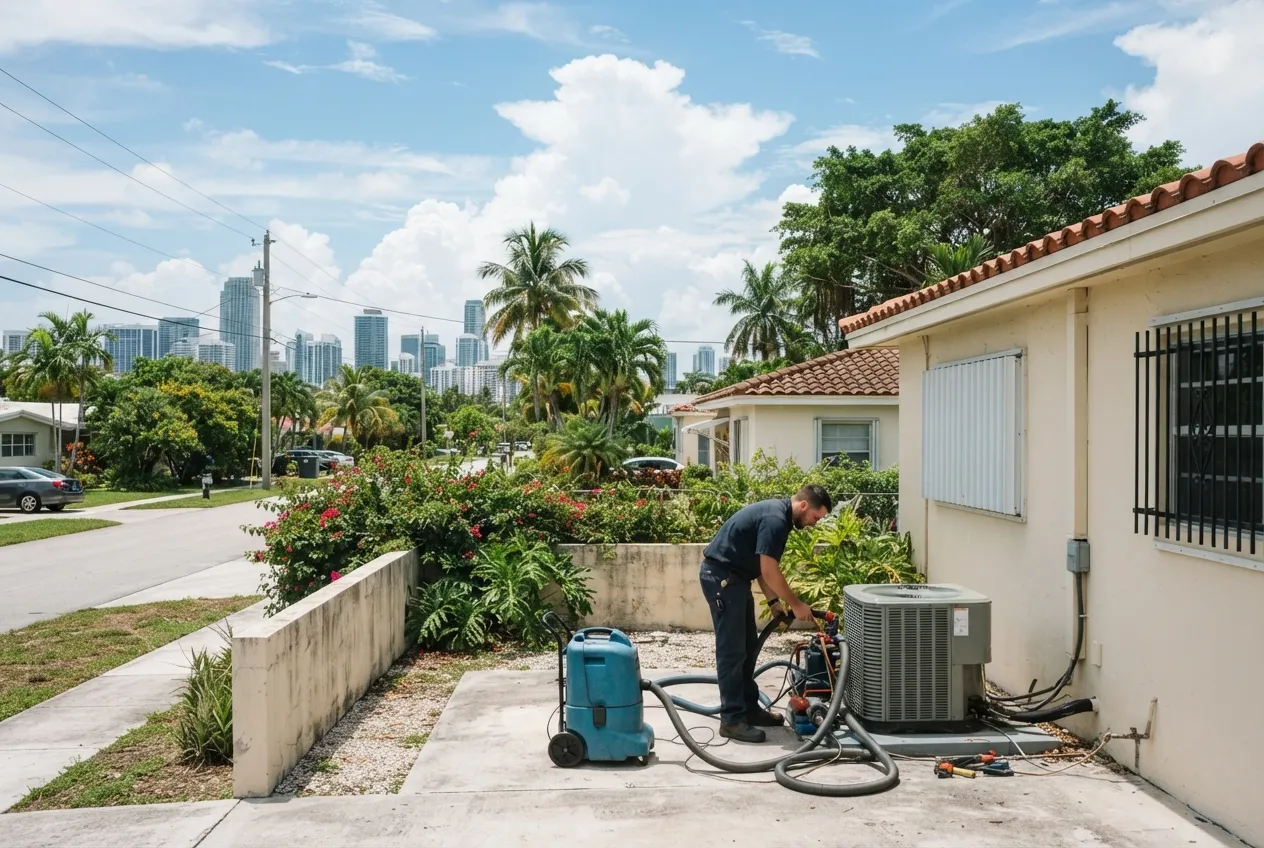
- Cleaning: a collection unit puts the ducts under negative pressure while brushes and air tools loosen debris from each run.
- Air handler work: as needed, we clean the blower, coil, and drain pan and clear the condensate line.
- Wrap-up: we reinstall registers, replace or recommend a filter, run the system to check airflow, and show you the results.