
The short answer
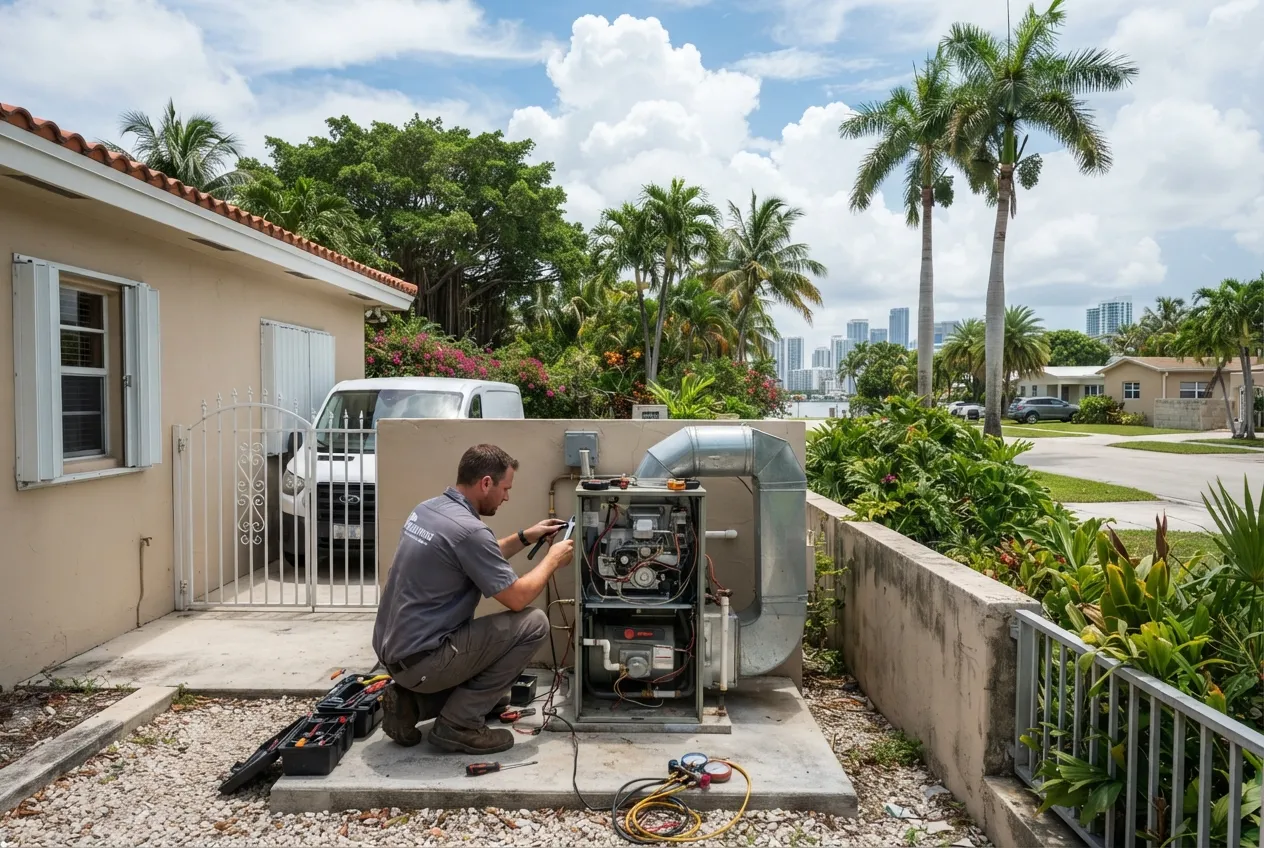
If your heat blows cold air, smells like burning, trips a breaker, or won't turn on at all, it needs a repair visit. FirstChoice HVAC Repair diagnoses electric heat strips, heat pumps, and gas furnaces in Miami Beach and nearby cities, explains what failed, and gives you clear repair or replacement options before any work begins.
Most Miami Beach homes don't need heat often, which is exactly why heating problems catch people off guard. When a cool front comes through between November and April, you switch the thermostat to heat and expect warm air. Instead you might get nothing, a burning smell, or a breaker that trips. In this area, "furnace" usually means one of three things: an electric air handler with heat strips, a heat pump running in heating mode, or, less often, a gas furnace. FirstChoice HVAC Repair diagnoses and repairs all three. This page explains the warning signs, what our technicians inspect, how we think about repair versus replacement, what affects cost, and what to expect when we come out.
Signs Your Furnace or Heating System Needs Repair
Because heating systems here can sit unused for months, problems often show up the first time you turn the heat on after a long summer. Dust collects on heat strips, parts corrode in the humid air, and storms can damage electrical components without anyone noticing. Call for service if you notice any of the following:
- The fan runs but the air coming out of the vents is cool or room temperature.
- A burning or electrical smell lasts more than a few minutes after the first startup of the season.
- The breaker for the air handler or furnace trips when heat is called for.
- The system turns on and off in short bursts and never warms the house.
- A heat pump blows cold air in heat mode, or the outdoor unit runs constantly without warming the home.
- You hear buzzing, clicking, rattling, or grinding from the indoor or outdoor unit.
- Your electric bill jumps during a cool spell even though you've only used the heat a few times.
- On a gas furnace, the burner won't light, the flame looks yellow instead of blue, or the carbon monoxide alarm sounds. If a CO alarm goes off, leave the home and call emergency services first.
What Our Technicians Check
A good repair starts with finding the actual cause, not just the part that failed. Our technicians check the whole heating path, from the thermostat to the vents, so the same problem doesn't come back a week later.
Salt air and summer humidity are hard on electrical connections and metal parts in coastal homes. Power outages and surges during the wet season and the Atlantic hurricane season, which runs from June 1 to November 30, can also damage control boards, relays, and capacitors. We look for these problems on every visit.
- Thermostat settings, wiring, and whether it is calling for the right type of heat
- Heat strip elements, sequencers, relays, and limit switches on electric air handlers
- Reversing valve, defrost controls, capacitors, and refrigerant performance on heat pumps
- Igniter, flame sensor, gas valve, burners, and venting on gas furnaces
- Blower motor, fan operation, and air filter condition
- Electrical connections, breakers, and signs of overheating or corrosion
- Ductwork and airflow problems that can make a working system feel weak
Repair or Replace: How We Help You Decide
Most heating problems in Miami Beach homes can be fixed with a repair. A burned-out heat strip, a failed sequencer, a weak capacitor, or a bad igniter usually doesn't mean you need a new system. We'll tell you plainly when a repair is the sensible choice.
Replacement is worth a conversation when the heating problem is part of a bigger issue with the whole system. Since your air handler or heat pump also cools your home for most of the year, a heating failure is often a good moment to look at the condition of the entire system. Things we consider include:
- The age and overall condition of the air handler, heat pump, or furnace
- Whether the same part has failed more than once
- Whether replacement parts are still available for your model
- Heavy corrosion, rust, or refrigerant leaks in a heat pump
- How well the system cools, since in this climate it runs for most of the year
- Whether a high-efficiency heat pump would make more sense than replacing an older electric heat setup
What Affects the Cost of Furnace Repair
We don't quote prices without seeing your system, because the cost depends on what we find. After the diagnosis, we explain the repair and its cost before we start, so you can decide with the full picture.
If you're considering a replacement, Florida Power & Light runs a residential HVAC program that offers rebates on qualifying high-efficiency central air conditioners and heat pumps. These are handled through participating contractors at installation, and we confirm the current terms before quoting them. The federal Energy Efficient Home Improvement Credit for heat pumps applied only to systems placed in service before December 31, 2025, so it is not available for new installations. The main factors that shape repair cost are:
- The type of system: electric heat strips, heat pump, or gas furnace
- Which part failed and whether it is common or specific to your model
- How easy the unit is to reach, such as a closet, attic, or rooftop
- Whether there is related damage, like corroded wiring or a damaged control board
- How many problems we find during the diagnosis
How a Furnace Repair Visit Works
We keep the process simple and explain each step so you know what's happening in your home.
Before we arrive, it helps to note when the problem started, what you've noticed, and whether any breakers have tripped. Please don't keep resetting a breaker that trips repeatedly, since that can point to an electrical fault.
- You contact us and describe the problem, and we schedule a visit.
- The technician asks what you've noticed, then inspects the thermostat, indoor unit, outdoor unit, and electrical components.
- We explain what we found in plain language and show you the problem when possible.
- You get your repair options and cost before any work begins.
- With your approval, we complete the repair and test the system in heat mode, and in cooling mode when it makes sense.
- We share any other issues we noticed so you can plan ahead for cooling season.
Furnace Repair by city
- Furnace Repair in North Bay Village
- Furnace Repair in Surfside
- Furnace Repair in Bay Harbor Islands
- Furnace Repair in Miami
- Furnace Repair in North Miami
- Furnace Repair in North Miami Beach
- Furnace Repair in Sunny Isles Beach
- Furnace Repair in Opa-locka
- Furnace Repair in Miami Springs
- Furnace Repair in Aventura
- Furnace Repair in Golden Beach
- Furnace Repair in West Miami