
The short answer
You likely need a new heat pump if your system runs constantly without keeping the house cool and dry, keeps needing the same repairs, or shows heavy corrosion. We size the new system to your home, check ducts and electrical, and give you a written quote with clear options before any work begins.
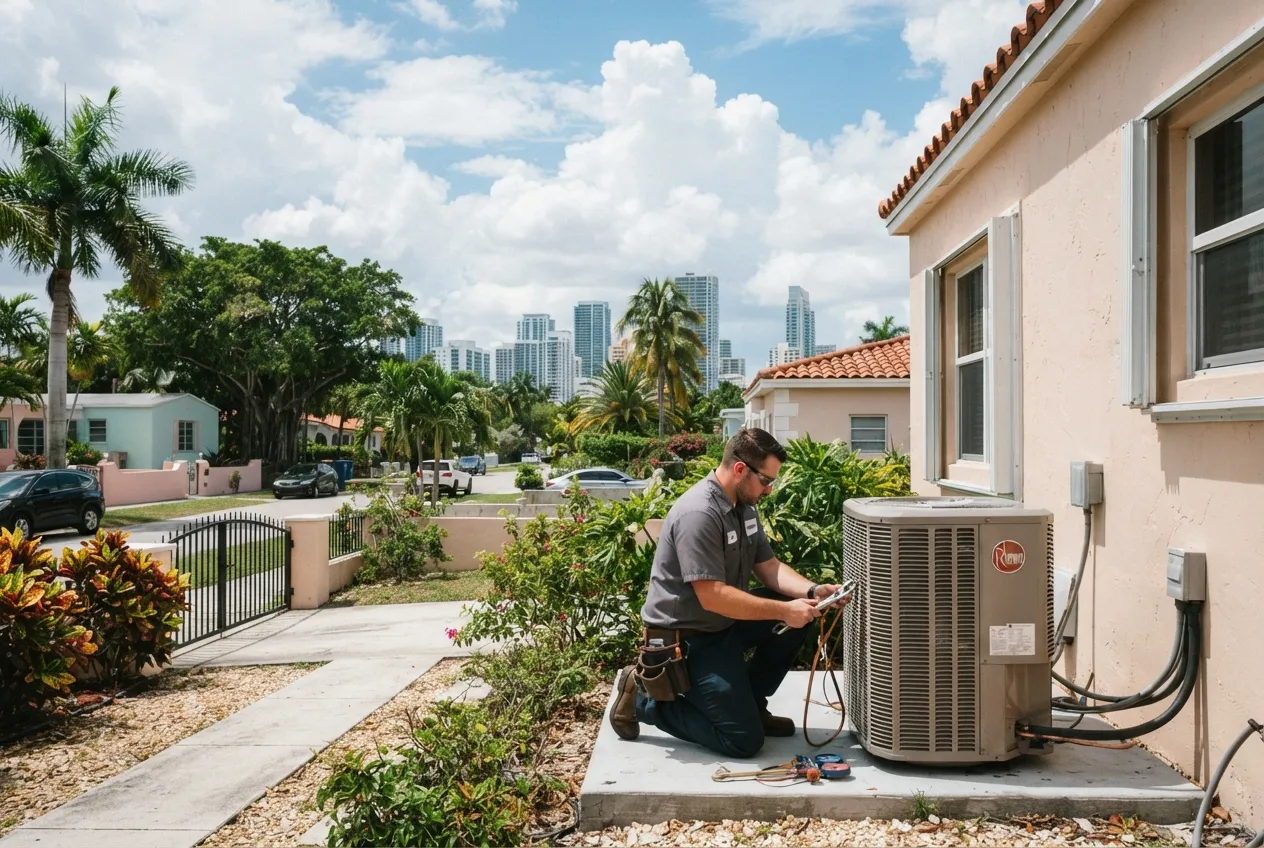
In many Miami Beach homes, a heat pump is the main cooling system, and it also handles the few cool mornings we get in winter. Air conditioning here runs for most of the year, so a heat pump that is undersized, worn out, or poorly installed quickly affects comfort and humidity. FirstChoice HVAC Repair installs heat pumps for homeowners in Miami Beach and nearby cities. This page explains when replacement makes sense, what we look at before recommending equipment, what drives the cost, and what to expect on installation day.
Signs You May Need a New Heat Pump
Heat pumps in our climate work hard. The humid wet season runs from May through October, and the system stays in steady use the rest of the year, so equipment tends to wear in a few predictable ways. Any one of these signs is worth a look. Several together usually point toward replacement.
- The system runs nearly nonstop but the house still feels warm or sticky
- Indoor humidity stays high even when the thermostat reaches its set temperature
- Refrigerant leaks keep happening or the same repair keeps coming back
- Rust or corrosion on the outdoor coil, cabinet, or connections, which is common near salt air
- Grinding, rattling, or buzzing from the outdoor unit or air handler
- Electric bills keep rising even though you use the house the same way
- Some rooms are noticeably warmer or cooler than others
- The system uses an older refrigerant that is becoming harder to service
What We Check Before Recommending a System
A new heat pump should be matched to your home, not just to the size of the old unit. Before we recommend equipment, we look at how the house gains and holds heat.
Then we explain what we found in plain terms. We also tell you which items affect the new system and which are optional.
- Square footage, ceiling heights, window size and direction, and insulation
- Ductwork condition, including leaks, crushed runs, poor insulation in hot attics, and return air sizing
- The air handler, drain line, and condensate pan, since removing moisture matters as much as cooling here
- Electrical service, disconnect, and breaker sizing for the new equipment
- Outdoor unit placement, pad condition, clearance, and exposure to salt spray and standing water
- Thermostat compatibility and wiring
Repair or Replace: Your Options
Not every problem calls for a new heat pump. A failed capacitor, contactor, fan motor, or clogged drain line is usually a reasonable repair on a system that is otherwise in good shape. When a repair makes more sense, we will tell you.
Replacement usually makes more sense in a few situations: a major part like the compressor or a coil fails on an older system, refrigerant leaks keep returning, corrosion has spread across the outdoor unit, or the system was never sized correctly for the home. In those cases, repair money often goes into equipment that will need attention again soon.
Some homes have a middle path. One option is replacing the outdoor unit and air handler together while keeping ductwork that tests in good condition. Another is replacing the system and fixing duct problems at the same time. We walk through these options so you can choose based on your budget and how long you plan to stay in the home.
What Affects the Cost of Installation
We quote every installation after seeing the home, because the same size heat pump can involve very different amounts of work. The main factors are:
Your written quote lists everything that is included, so you can compare options side by side.
- System capacity and efficiency rating
- Single-stage, two-stage, or variable-speed equipment
- Whether the air handler is replaced along with the outdoor unit
- Duct repairs, sealing, or replacement
- Electrical upgrades needed to support the new system
- Access to attic, closet, or rooftop locations, plus any condo or HOA requirements
- New pads, elevated stands, or placement changes in flood-prone spots
- Permits and inspections required by the local building department
- Thermostat or zoning upgrades
How an Installation Visit Works
The first visit is an assessment. A technician looks at your current system, the ductwork, and the electrical setup. They ask how different rooms feel and take measurements. You then get recommendations and a written quote, usually with more than one equipment option.
On installation day, the crew protects floors and work areas, recovers refrigerant from the old system, and removes the old equipment. They set the new outdoor unit and air handler and connect the refrigerant lines, wiring, and condensate drain. Then they pressure-test and evacuate the lines before charging the system.
Before leaving, we start the system and check airflow, temperatures, and refrigerant levels. We test the drain and show you how to use the thermostat and change the filter. Most residential installs are finished in one day, though duct work or rooftop access can take longer. Hurricane season runs from June 1 through November 30, and storms can shift the schedule, so we keep you updated if weather affects your date.
Rebates and Incentives
Florida Power & Light runs a Residential HVAC program that offers rebates on qualifying high-efficiency central air conditioners and heat pumps. Participating contractors handle the rebate at the time of installation. Program terms can change, so we confirm current eligibility before including any rebate in your quote.
The federal Energy Efficient Home Improvement Credit covered qualifying heat pumps placed in service before December 31, 2025. It is not available for new installations now, so we do not factor it into pricing.
Heat Pump Installation by city
- Heat Pump Installation in North Bay Village
- Heat Pump Installation in Surfside
- Heat Pump Installation in Bay Harbor Islands
- Heat Pump Installation in Miami
- Heat Pump Installation in North Miami
- Heat Pump Installation in North Miami Beach
- Heat Pump Installation in Sunny Isles Beach
- Heat Pump Installation in Opa-locka
- Heat Pump Installation in Miami Springs
- Heat Pump Installation in Aventura
- Heat Pump Installation in Golden Beach
- Heat Pump Installation in West Miami