
The short answer
Most Miami Beach homes heat with electric heat strips or a heat pump rather than a gas furnace, and that heating equipment usually shares an air handler with the air conditioner. We inspect the whole system, explain whether a repair or a replacement makes more sense, and give you a written quote before any work begins.
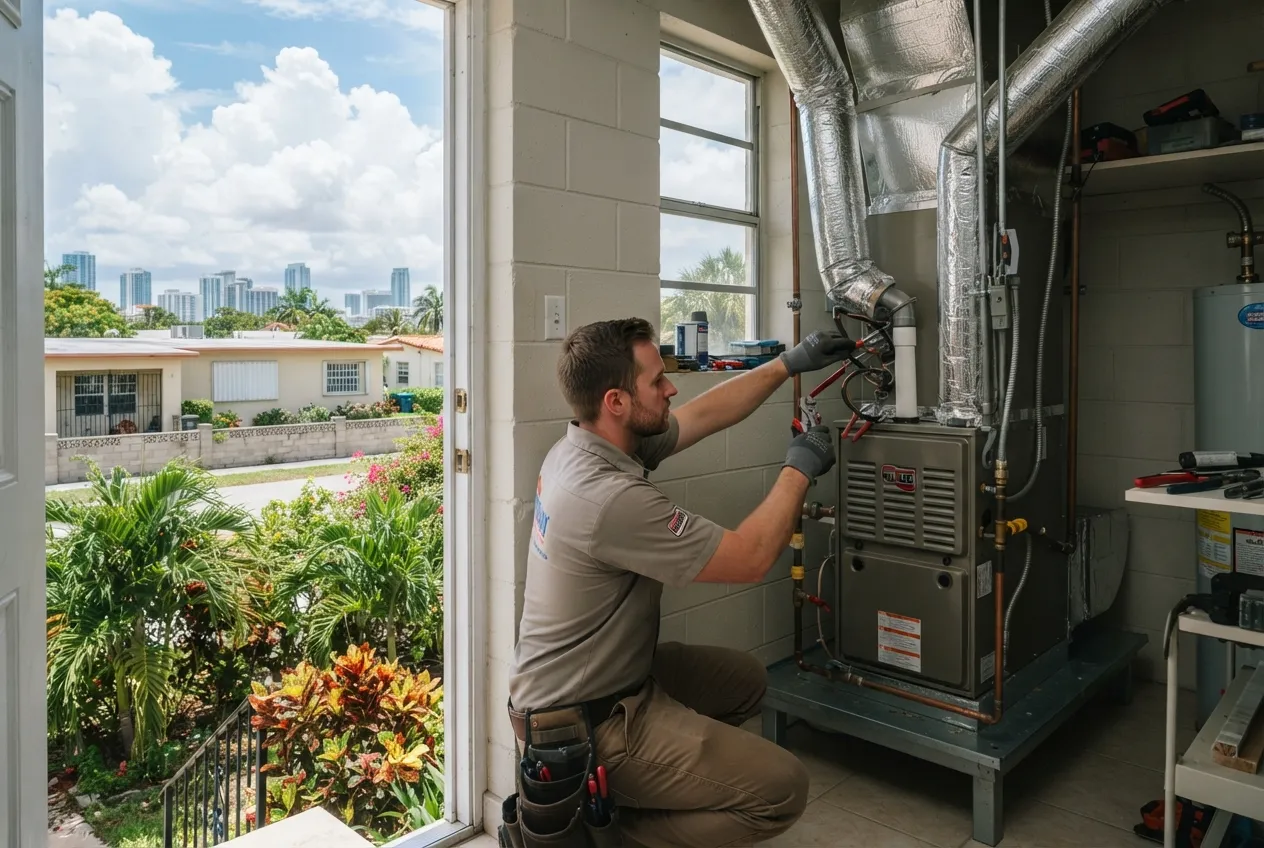
In Miami Beach, "furnace" usually means the heating side of your central system. That might be electric heat strips inside the air handler, a heat pump that both cools and heats, or, in some homes, a gas furnace paired with central air. Heat only runs for part of the year here, because November through April is the cooler, drier stretch. But when a cold front moves through, you want it to come on without a burning smell or a tripped breaker. Most local systems share one air handler, blower, and set of ducts for heating and cooling, so a heating installation choice also affects your air conditioning, which runs most of the year. This page explains the signs it's time for new heating equipment, what we inspect, your repair and replacement options, what affects the cost, and how a visit works.
Signs You Need a New Furnace or Heating System
Heating problems here tend to show up all at once, on the first chilly night of the season, after months of the system sitting unused in heat mode. Because the same air handler and blower usually serve your air conditioning, heating trouble can also point to wear that will eventually affect cooling.
Watch for these warning signs:
- A burning or electrical smell that doesn't fade after the first few minutes of running the heat. A brief dusty smell on first use is normal.
- Breakers tripping when the heat comes on, which often points to failing heat strips or wiring
- The blower runs, but the air from the vents stays cool in heat mode
- Some rooms warm up while others stay cold
- Rust, corrosion, or water damage inside the air handler cabinet, which is common in humid, salty coastal air
- A heat pump that struggles in heat mode or keeps switching to backup heat
- Repeated repairs on the same system, or replacement parts that are getting hard to find
What We Check Before Recommending Installation
A sound installation starts with an honest look at what you already have. We don't pick new equipment by copying the size printed on the old unit's label, because that unit may never have been sized correctly for your home.
We write down what we find and go over it with you before we talk about equipment, so you understand why we're recommending what we recommend.
- The type of heat you have now: electric heat strips, a heat pump, or a gas furnace
- Electrical service, breaker size, and wiring for the heating load
- Air handler condition, including the blower motor, evaporator coil, cabinet, and drain pan
- Ductwork for leaks, crushed or disconnected sections, and missing insulation, especially in attics
- Thermostat type, wiring, and compatibility with new equipment
- Home size, insulation, windows, and sun exposure, which determine how much heating and cooling capacity you actually need
- For gas furnaces: venting, gas supply, and combustion safety
Repair vs. Replace: Your Options
Not every heating problem calls for new equipment. A failed heat strip element, sequencer, limit switch, or relay can often be replaced on its own. That's usually the sensible choice when the rest of the system is in good shape.
Replacement makes more sense when the air handler cabinet is corroded, the blower or coil is failing too, or the indoor and outdoor units are badly mismatched. Since heating and cooling share equipment in most Miami Beach homes, it often pays to look at the whole system together rather than fixing one part after another.
Florida Power & Light's Residential HVAC program offers rebates on qualifying high-efficiency central air conditioners and heat pumps, delivered through participating contractors at the time of installation. Program terms change, so we confirm the current details before including them in a quote. The federal Energy Efficient Home Improvement Credit covered qualifying heat pumps placed in service before December 31, 2025. It is not available for new installations now.
- Repair the failed heating component and keep your existing system
- Replace the heat strip kit or the air handler while keeping a newer outdoor unit
- Switch from electric resistance heat to a heat pump, which heats more efficiently
- Replace the full system with matched indoor and outdoor equipment
What Affects the Cost of Installation
We give you a written quote after the inspection, and we walk you through each line so nothing is a surprise. These are the main factors that move the price up or down:
- The type of heating: heat strips, a heat pump, or a gas furnace
- Equipment capacity, based on a proper load calculation for your home
- The efficiency rating of the equipment you choose
- Whether you're replacing the air handler, the outdoor unit, or both
- Ductwork repairs, sealing, or modifications
- Electrical upgrades, such as a new breaker or new wiring
- Access to the equipment, such as tight closets, attics, or condo mechanical rooms
- Permits and any condo or homeowners association requirements
- Thermostat upgrades
How an Installation Visit Works
We keep the process simple and explain each step. If you live in a condo, let us know when you book so we can plan around building rules, elevator reservations, and work hours.
For homes with outdoor equipment, we mount and secure the unit with storms in mind. The Atlantic hurricane season runs from June 1 to November 30, and a well-secured outdoor unit is part of a sound installation.
- Scheduling: we confirm your address, access, and any building or association rules
- Inspection: we assess your current system, ducts, and electrical, and take measurements
- Recommendation: you get written options and a quote, with time to ask questions
- Installation day: we protect floors, remove the old equipment, install the new system, and connect the electrical, ductwork, drain line, and thermostat
- Testing: we run both heat and cooling, then check airflow, temperatures, electrical draw, and drainage
- Walkthrough: we show you the thermostat settings and filter location, clean up, and haul away the old equipment